Home / Services / Kitchen Cabinets

SERVICE 06 · SELECTION ROOM · MALVERN

Kitchen cabinets are three decisions: the box, the front, the hardware

The box decides how long the kitchen lasts. The front decides how it reads in the room. The hardware decides how it feels every single day. Cabinetry is supplied and installed in that order, and this page sets the choices out the same way — so you can specify joinery for a Malvern home rather than point at a showroom wall and hope.
Making something to fit an irregular wall or a period alcove? That belongs with custom cabinetry.

SCOPE OF THIS SERVICE

Carcasses & installation

Board substrate · edging · scribing · levelling

Door fronts

Handleless · shaker · slab · routed profile

Finishes

Two-pack · matt laminate · timber veneer

Hardware

Hinges · runners · pulls and integrated grips
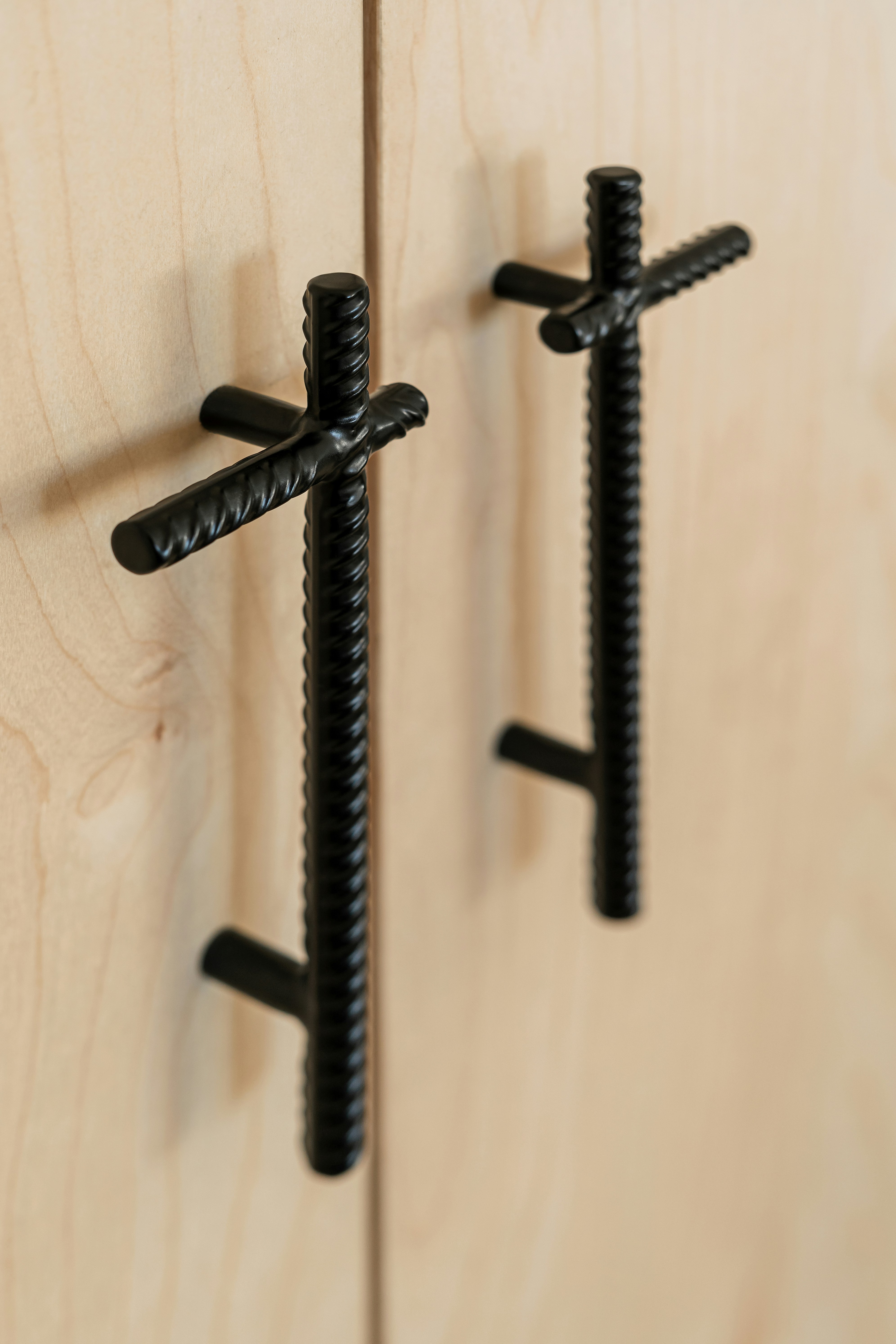
Internal fit-out — drawer dividers, corner systems, pantry inserts — is planned alongside the fronts and detailed under storage solutions.

06

CABINETRY

The box you never see does most of the work

Doors get chosen in an afternoon; carcasses decide whether the kitchen still closes properly in ten years. Three things matter, and none of them are visible once the fronts go on.

Substrate

Board & construction

Moisture-resistant substrate · dowelled or mechanically joined · adjustable legs

Sink and dishwasher runs take the most punishment, so board choice and sealed cut-outs matter more there than anywhere else in the room.

Edging

Exposed edges & end panels

Matched edge tape · finished end panels · sealed shelf edges

Every return, island end and open shelf is an edge somebody will touch. Specifying them at drawing stage avoids the raw white line that gives budget joinery away.

Installation

Scribing & levelling

Scribed fillers · levelled rails · concealed fixings

Malvern walls are rarely square. Cabinets are levelled and scribed to the room as found, because the benchtop template is taken off the installed run — not off the plan.

Four door profiles, and how each one reads at home

The profile is the single choice that moves a kitchen between contemporary and period-sympathetic. Finish and colour can follow later; the front shape cannot be changed once doors are manufactured.

01

Handleless

Routed grip or J-pull · shadow line · no protruding hardware
Quietest option in an open-plan room, because nothing interrupts the horizontal line. Needs accurate setting-out — the grip is machined, not screwed on afterwards.

02

Shaker

Five-piece frame · recessed centre panel · knob or bar pull
Sits comfortably in Edwardian and interwar homes around Malvern and Armadale. Frame width changes the character more than colour does — narrow reads modern, wide reads traditional.

03

Slab

Flat front · square or softened edge · hardware-led
A flat front puts all the expression into finish and pull. It is the most forgiving profile to clean and the least forgiving of a cheap handle.

04

Routed profile

Machined detail · softened arris · painted finish
A single machined line or bevel gives a painted door depth without a full frame. Useful where a period room wants detail but not a formal shaker. More in the cabinet ideas guide.
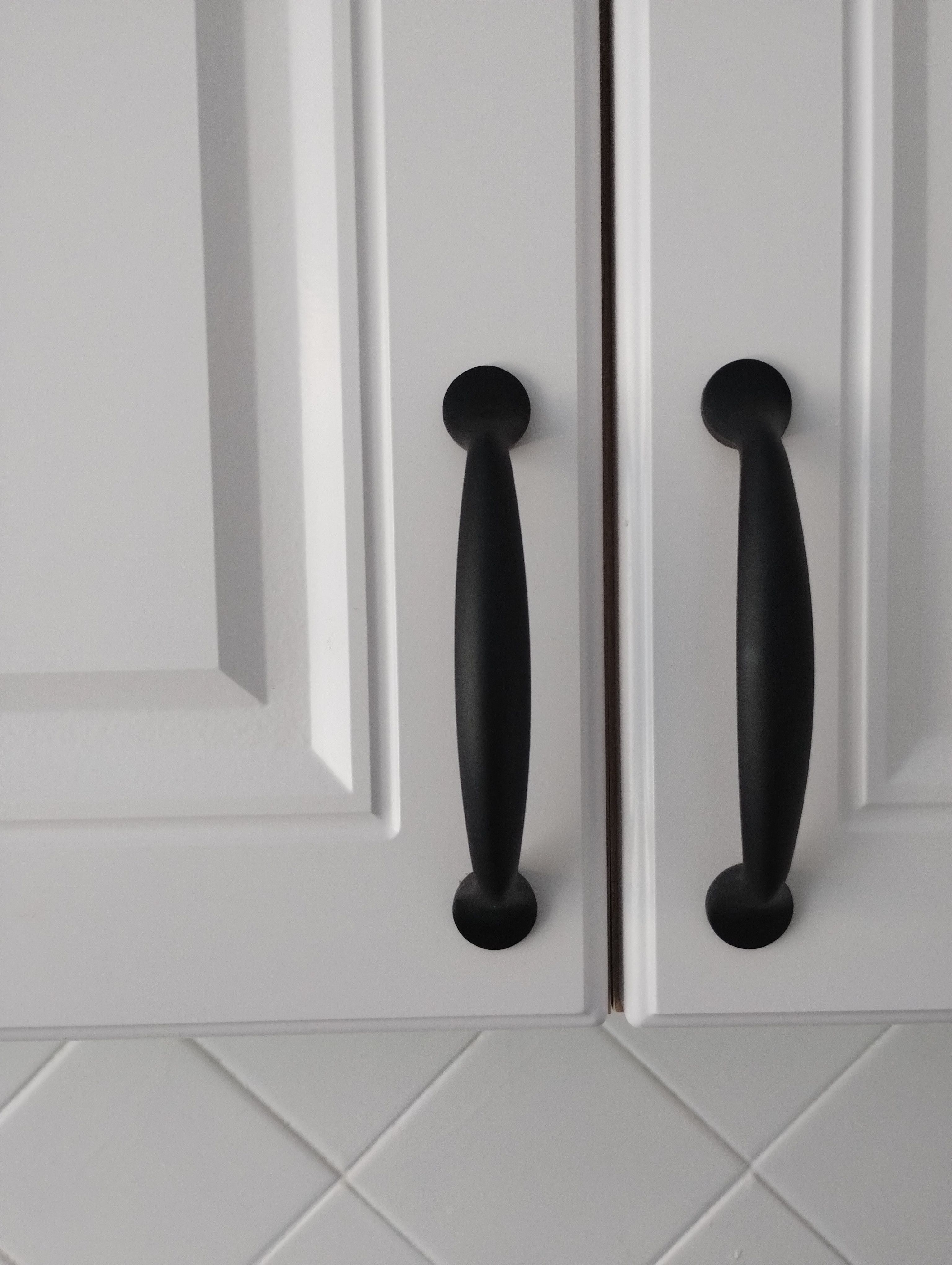
Close-up of white raised-panel kitchen cabinet doors with matte black vertical handles above white tiled backsplash.

Reference photograph · painted shaker fronts with matt black bar pulls against white wall tile

Finishes behave differently under Melbourne light

Finish

Two-pack polyurethane

Sprayed colour · matt to gloss · seamless on shaped doors

The only finish that wraps a routed or shaker profile in one continuous colour. Repairable, and matched to a colour rather than a supplier’s range.

Finish

Matt laminate

Pressed surface · fingerprint-resistant grades · flat fronts only

Hard-wearing and consistent across a large run — the sensible choice for family kitchens and for tall banks of doors that catch side light.

Finish

Timber veneer

Real grain · sequenced or random match · clear or tinted coat

Warms a pale stone benchtop and stops a minimal kitchen feeling clinical. Grain direction and matching should be agreed before manufacture, not discovered on delivery.

Hardware is the part you touch

Hinges and runners are the mechanical half of a cabinet, and the half most people never compare. Soft-close action, opening angle in tight corners, and whether drawers run on undermount full-extension gear all change the daily experience far more than door colour does.
Pulls are specified alongside the profile: a slab front carries a long bar, a shaker takes a knob or a short pull, and a handleless run carries nothing at all. Bring one handle you like to the selection conversation — it settles the rest of the palette quickly.

STAGE 08 OF 12 · CABINETRY

Where cabinetry sits in the build

Cabinets are installed after removal and services preparation, once plumbing and power sit where the drawings say they do. Only then can benchtops be templated off the real run, and the splashback measured off the finished stone. Ordering fronts early is the most common way a schedule comes apart.
See the full sequence in the twelve-stage process, or how it runs end to end in a complete kitchen renovation.

COMMON QUESTIONS

Before you choose a door

Can I keep my existing carcasses?

If the boxes are sound, square and in the right places, replacing fronts, hardware, benchtop and splashback is a kitchen makeover rather than a rebuild. If the layout is wrong, new doors will not fix it — that is remodelling.

How is this different from custom cabinetry?

Cabinets here are built to standard module widths and fitted to the room. Custom cabinetry is drawn for a specific opening — a chimney breast, a sloping ceiling, an integrated appliance housing — and made to measure.

When do the internals get decided?

At design stage, with the fronts. Drawer dividers, corner systems, bin sets and pantry fit-out are planned as part of storage solutions, because they dictate cabinet widths.

Will the colour look the same at home?

Not always. Take the sample door home, stand it where the cabinet will go, and look at it in morning light and under artificial light — which is why lighting is chosen alongside finishes, not after them.

Bring one door sample and one handle

That is genuinely how a cabinetry conversation starts moving: a front you can hold, a pull you like the weight of, and the room measured. Tell us the kitchen, the suburb and roughly when you want the work done, and we will take it from there.