Home / Kitchen Guides / Benchtop Materials
SURFACE GUIDE · SELECTION ROOM · MALVERN
Five benchtop materials, compared on the same five terms
Benchtop showrooms are organised by supplier, which is the least useful way to choose. A slab that looks superb under showroom downlights can be the wrong answer for a household that bakes, or for a narrow Malvern galley where the same surface has to turn a corner and climb the wall as a splashback.
So this guide sets natural stone, engineered composite, porcelain, solid timber and laminate against the same five questions: how it looks, how it wears, what it asks of you, how it can be fabricated, and where it genuinely belongs. Read it as a shortlist tool, then bring the shortlist to the measure.
Related: kitchen benchtops · splashbacks · what drives renovation cost
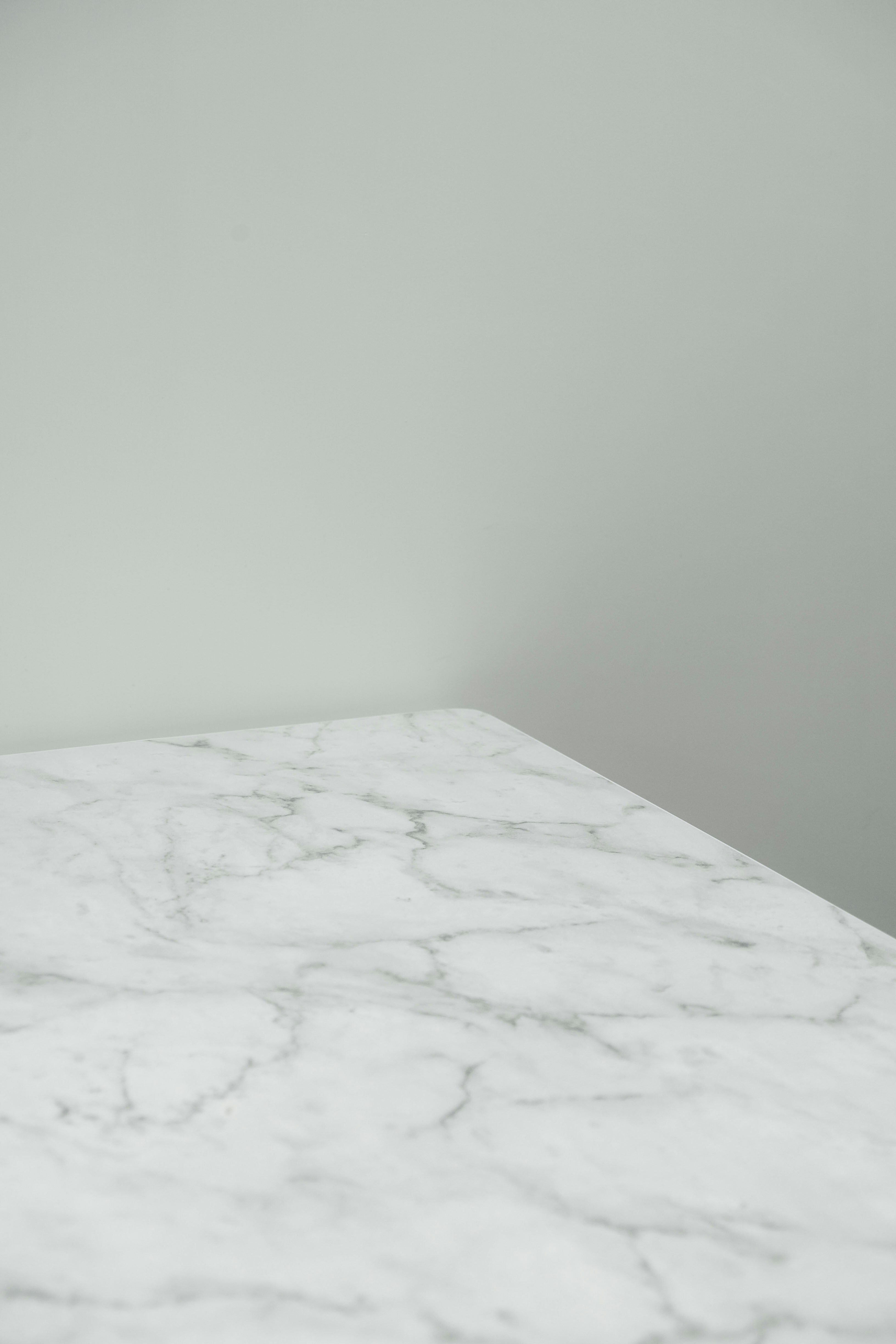
Reference photograph · veined marble in raking daylight — the same surface reads flat and grey under showroom downlights, which is why samples are judged in the room they are going into
CHECKLIST · BEFORE THE SHOWROOM
Six things to settle before you look at slabs
01 How the bench is used. Hot pans set down, acidic prep, homework and craft, or mostly display.
02 Whether the splashback continues. A full-height slab return doubles the material and dictates slab size.
03 Thickness and edge. 20mm square, a mitred 40mm apron or a thin 12mm profile — each changes the room’s weight.
04 Sink and cooktop type. Undermount, integrated drainer grooves and flush cooktops rule some materials out immediately.
05 Where joins will land. Long runs and islands need a join decided on the drawing, not on install day.
06 Who maintains it. Be honest about resealing, oiling and blotting spills within the minute.
Answers one to five come out of kitchen design; answer six is the one only you can give.
01
Stone
THE SPECIMEN LADDER
Natural stone: marble, granite and limestone
Quarried slab · 20–40mm · book-matched veining · sealed
LookNo two slabs repeat. Vein direction can be run along an island or mitred around a corner so the movement continues down the apron. Choose the actual slab, not a swatch.
WearGranite is hard and heat-tolerant. Marble and limestone are softer: lemon, wine and cleaning acids etch the polish into dull marks, and honed finishes hide this far better than polished.
MaintenancePenetrating sealer, reapplied as the fabricator directs. Blot rather than wipe, and keep acidic cleaners off it. Scratches and etches can often be re-honed in place.
Best used forIslands and feature runs where the stone is the point, and for households prepared to let a surface patinate. Frequently specified in luxury kitchen renovations.
02
Composite
Engineered surfaces: mineral composite slabs
Manufactured slab · 20mm typical · consistent pattern · unsealed
LookPredictable. What the sample shows is what the whole run will do, which suits long uninterrupted benches and multiple matching pieces. Veined designs read more graphic and less geological than quarried stone.
WearNon-porous and stain-resistant in normal use, but resin-bound surfaces do not like direct heat — a pan straight off the burner can mark them. Trivets, always.
MaintenanceThe lowest-effort of the five: soap, water, no sealing. Deep scratches and chips are harder to make good invisibly than on natural stone.
Best used forBusy family kitchens that want stone character with minimal upkeep. Note that the Australian market has moved to silica-free composites, so ask your fabricator what the current product actually is before you fall for a discontinued colour.
03
Fired
Porcelain: sintered large-format slabs
Fired slab · 12–20mm · mitred to thickness · through-body or surface print
LookThin and precise. A 12mm slab mitred to a 20mm edge gives the sharpest profile available, and the same slab can run up the wall as a full-height splashback with no grout line at all.
WearVery hard, heat-tolerant and UV-stable, so it holds colour in a bright north-facing room. The trade-off is brittleness: edges and cut-outs can chip if knocked, and on printed slabs a deep chip shows the body beneath.
MaintenanceNon-porous, no sealing, indifferent to acids. Matt finishes show smears less than polished in a kitchen that gets real use.
Best used forSlim contemporary profiles, continuous bench-to-wall surfaces and heavy cooking. Fabrication skill matters more here than with any other material — see splashbacks for the wall side of the decision.
04
Timber
Solid timber: oak, blackbutt and messmate
Laminated board · 26–40mm · oiled or hardwax · repairable
LookThe one material that warms a pale room instantly. Grain, tone and thickness read as furniture rather than surface, which is why it works so well on a breakfast return or a single island top against stone elsewhere.
WearIt marks, and that is the deal. Knife scores, water rings near the tap and darkening around a sink cut-out are normal; timber moves with humidity, so cut-outs and fixings must allow for it.
MaintenanceThe most hands-on: re-oiling on a schedule, and drying the area around the sink. The compensation is full repairability — sand it back and the surface is new again.
Best used forDry zones, island seating, open shelving and period-sympathetic kitchens. Often paired with a stone or porcelain wet run, detailed through custom cabinetry.
05
Sheet
Laminate: decorative surface on board
Sheet on substrate · 33–40mm · ABS or postformed edge · sealed joins
LookBetter than its reputation. Matt textured decors in solid colours and fine stone prints look convincing at arm’s length; the giveaway is always the edge and the corner, so specify a matching ABS edge rather than a rolled profile.
WearFine for daily wiping, poor with heat and unforgiving of standing water at a sink join, where the substrate can swell. Scratches cannot be polished out.
MaintenanceNothing routine. Keep silicone at wet junctions sound, use an over-mount or top-mount sink, and it behaves for years.
Best used forRentals, laundries, butler’s pantries and kitchen makeovers where the budget belongs in cabinetry and storage rather than the horizontal surface.

Reference photograph · samples viewed together rather than one at a time — the only way to judge whether a benchtop, a cabinet front and a splashback agree
THE PART THAT IS NOT THE MATERIAL
Edge, thickness and joins decide as much as the slab
Two kitchens can specify the same slab and look nothing alike. A 20mm square edge sits quietly; a mitred 60mm apron on an island turns the same stone into a solid block; a 12mm porcelain edge makes the bench look like a drawn line. Decide the profile with the elevation in front of you, because it changes the visual weight of the whole room far more than the colour does.
Joins are the other honest conversation. Slabs have finite dimensions, so a long run or a large island may need one, and the choice is where it lands — behind a tap, at a cabinet line, or dead centre of the island where you will see it every day. Vein-matched joins are possible in stone and porcelain, and are worth planning for rather than discovering on installation day.
Everything above is templated off cabinetry that is already installed and scribed to the wall, which is why benchtops sit where they do in the sequence — after cabinetry and before the splashback.
NEXT STEP
Choose the surface, and the rest of the kitchen follows
Narrow it to two materials, then look at them in your own light next to the cabinet finish. We work through that comparison on site in Malvern, Malvern East, Armadale, Toorak, Glen Iris, Kooyong, Prahran, South Yarra and Caulfield North, and carry the decision through to templating and install as part of a complete kitchen renovation. Questions first? Get in touch.
Upkeep at a glance
Natural stone · seal, blot, re-hone
Engineered · wipe, no heat
Porcelain · wipe, mind the edges
Timber · re-oil, keep dry, sand back
Laminate · wipe, watch the joins
Keep reading: cabinet ideas · splashback ideas · all kitchen guides